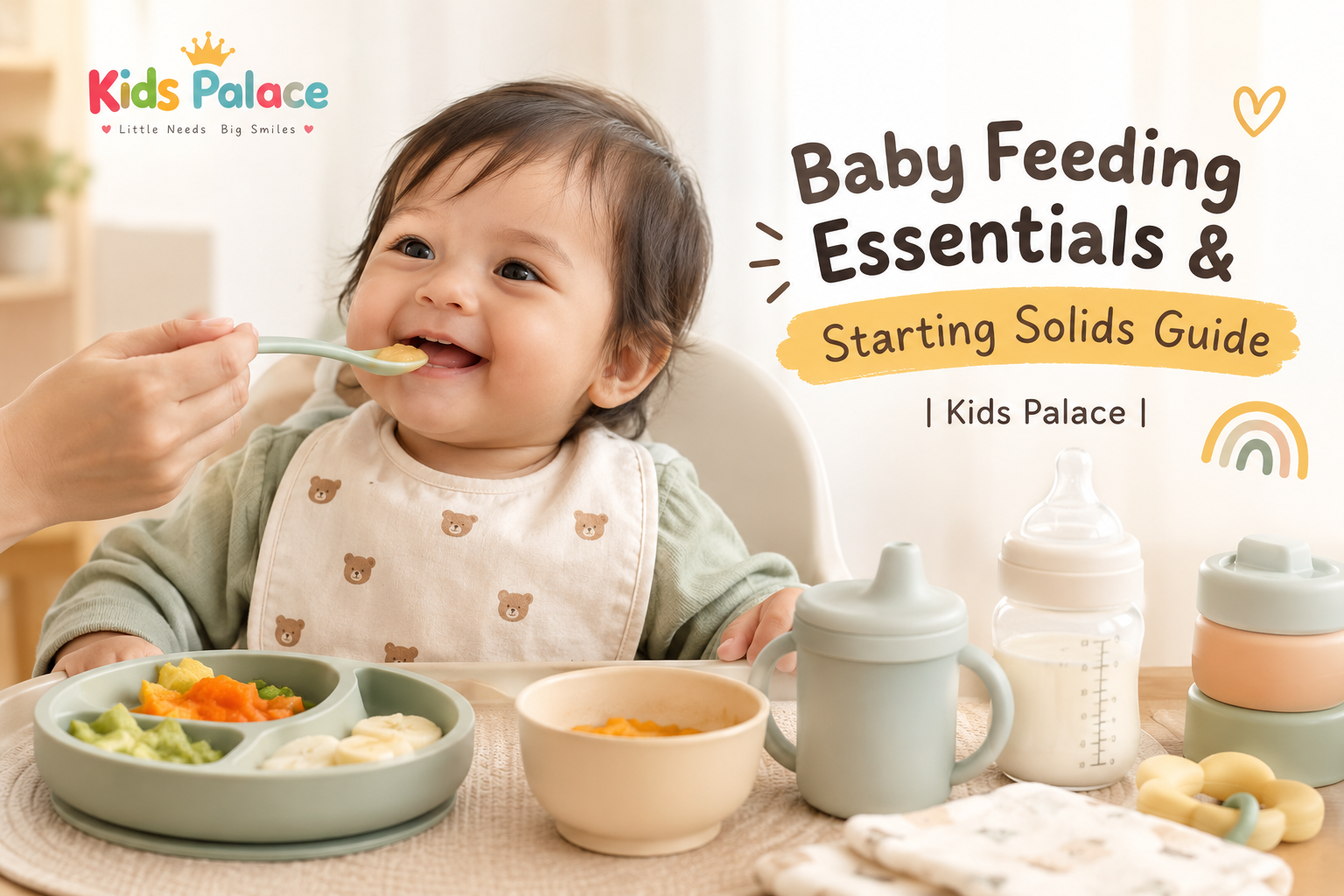
Starting solid foods is an exciting milestone for both babies and parents. Suddenly, mealtimes become a new experience filled with different tastes, textures, colours — and sometimes quite a lot of mess!
But starting solids can also leave parents wondering:
What should I feed my baby? What feeding products do I actually need? When should I introduce them? And how can I make mealtimes easier?
If you're preparing to start complementary feeding, this guide will help you understand the basics and create a practical baby feeding essentials checklist for your little one.
Important: Every baby develops differently. For personalized feeding advice, especially if your baby was born prematurely or has allergies, medical conditions or feeding difficulties, speak with your pediatrician or qualified healthcare professional.
For most babies, complementary foods are introduced at around 6 months of age, alongside continued breast milk or infant formula. WHO recommends starting complementary foods at 6 months, when a baby's nutritional and developmental needs begin to increase.
Age alone isn't the only consideration. Babies should also show signs that they are developmentally ready for food.
Some signs include:
Being able to sit upright with support
Having good head and neck control
Opening their mouth when food is offered
Bringing objects toward their mouth
Showing interest in food
Being able to swallow food rather than consistently pushing it back out
These developmental signs are useful when deciding whether your baby is ready to begin exploring food.
You don't need a kitchen full of baby products to begin complementary feeding.
A few practical essentials can make mealtimes much easier.
A baby-sized bowl is one of the simplest feeding essentials.
Look for a bowl that is:
Easy to clean
Comfortable to use
Appropriate for your baby's age
Made from clearly specified, suitable materials
Stable during feeding
A bowl with a suction base can also be useful for babies who are beginning to explore self-feeding.
A regular adult spoon may not be the most comfortable option for a young baby.
A baby feeding spoon is designed with a smaller shape that can make early feeding easier.
When choosing a spoon, consider:
Size and shape
Smooth edges
Ease of cleaning
Age suitability
Material information from the manufacturer
Kids Palace offers several baby spoon options as part of its feeding collection.
A feeding set can be convenient for parents who want several mealtime essentials together.
Depending on the set, it may include items such as:
Bowl
Plate
Spoon
Sippy cup
Bib
Kids Palace currently offers a 5-piece silicone baby self-feeding set containing a pocket bib, plate, bowl, spoon and sippy cup with lid, listed as suitable for 6+ months.
Instead of purchasing every item separately, a well-organized feeding set can be a practical starting point.
Explore the Kids Palace Silicone Feeding Collection →
Once your baby starts eating, expect some food to end up everywhere except the baby's mouth.
A bib can help protect clothing during meals and make clean-up easier.
Parents can choose between different styles depending on their baby's age and feeding stage.
For babies beginning self-feeding, a pocket bib can be particularly useful for catching some dropped food.
As babies develop their feeding skills, learning to drink from an appropriate cup can become part of the transition toward independent eating and drinking.
Choose a cup that is suitable for your child's developmental stage and follow the manufacturer's instructions.
Remember that feeding products should be cleaned regularly and kept hygienic.
A fruit feeder can be another feeding accessory parents may consider when introducing fruits.
Kids Palace currently offers silicone fruit feeders in its baby feeding collection.
Always follow the product's age recommendations and instructions, and supervise your baby while they are eating.
There is no single food that every baby has to start with.
Around 6 months, babies can gradually be introduced to a variety of foods, including vegetables, fruits, grains, proteins and appropriate dairy foods. CDC guidance recommends offering a variety of nutritious foods rather than relying on one type of food.
You might introduce foods such as:
Soft-cooked carrots
Sweet potato
Pumpkin
Spinach
Peas
Banana
Avocado
Soft-cooked apple
Pear
Other appropriately prepared fruits
Oats
Fortified infant cereals
Soft grains prepared appropriately
Eggs
Lentils
Beans
Meat or other suitable protein foods
The texture should be appropriate for your baby's developmental abilities. Foods can begin soft and mashed, with textures gradually becoming thicker and more varied as your baby's eating skills develop.
When starting solids, take things slowly.
You don't need to introduce a huge variety of foods in one meal.
Start with small amounts and gradually increase variety and texture as your baby becomes more comfortable with eating.
CDC guidance suggests introducing single-ingredient foods initially and allowing a few days between new foods so parents can identify possible problems or reactions.
If your child has a known allergy, severe eczema or another medical concern, talk with your healthcare professional about introducing potentially allergenic foods.
One of the most important parts of introducing solids is texture.
At the beginning, babies may be more comfortable with soft, mashed or pureed foods.
As their eating skills develop, they can gradually move toward thicker textures and appropriately prepared soft finger foods. WHO recommends gradually increasing food consistency and variety according to the child's age and abilities.
Never assume that a food is safe simply because it is small.
Some foods can be choking hazards, so foods should be prepared according to your child's developmental stage. Babies should always be supervised while eating.
Mealtimes aren't only about getting food into your baby's tummy.
They are also an opportunity for your baby to learn.
Responsive feeding means paying attention to your baby's hunger and fullness cues, feeding patiently and encouraging your baby without forcing them to eat. WHO recommends responsive feeding as part of appropriate complementary feeding.
Your baby may:
Open their mouth when hungry
Reach toward food
Turn away when full
Slow down during feeding
Lose interest in food
Try to make mealtimes calm and positive.
And don't worry if your baby doesn't love every food immediately.
New tastes and textures can take time.
As complementary feeding develops, the frequency of meals gradually increases.
WHO recommends:
6–8 months:
Around 2–3 complementary meals per day.
9–11 months:
Around 3–4 meals per day.
12–23 months:
Around 3–4 meals per day, with nutritious snacks when appropriate.
These are general guidelines, not a strict schedule for every child. Your baby's appetite, development and individual needs can vary.
If you're preparing to start solids, here's a simple shopping checklist.
☐ Baby feeding spoon
☐ Baby bowl
☐ Baby plate
☐ Bib
☐ Cup appropriate for baby's stage
☐ Feeding set
☐ Silicone feeding utensils
☐ Suction-base bowl
☐ Fruit feeder
☐ Food storage accessories
☐ Bottle/feeding brush where appropriate
☐ Clean storage area
☐ Dedicated space for feeding utensils
You don't need everything on this list immediately.
Start with the basics and add products as your baby's feeding skills develop.
When shopping for baby feeding products, don't choose something simply because it looks cute.
Consider these five things:
Always check the manufacturer's recommended age and intended use.
Look for clear information about what the product is made from and how it is intended to be used.
Baby feeding products need frequent cleaning, so practical designs can make everyday life easier.
Look for shapes and sizes that are appropriate for babies and young children.
Feeding products are used frequently, so choose products designed for regular everyday use.
Starting solids can be messy.
There will probably be food on the spoon, the bib, the high chair — and sometimes the floor.
That's okay.
The goal isn't to make every meal perfectly clean.
The goal is to give your baby opportunities to explore food, develop feeding skills and gradually become more comfortable with different tastes and textures.
A few practical feeding products can make that process easier for parents and more enjoyable for babies.
At Kids Palace, you can find a growing collection of baby feeding products designed for different stages of your child's development.
From silicone spoons and bowls to feeding sets, bibs, fruit feeders and bottles, our collection makes it easier for parents to find everyday feeding essentials in one place.
Whether your baby is just starting solids or becoming more independent at mealtimes, choosing practical, age-appropriate feeding products can make everyday routines a little easier.
Explore the Kids Palace Feeding Collection →
Most babies can begin complementary foods at around 6 months, when they are developmentally ready. WHO recommends starting complementary foods at 6 months alongside continued breastfeeding, while individual readiness should also be considered.
A baby feeding spoon, bowl, bib and appropriate drinking cup are useful basics. A feeding set can also be convenient because several essential items come together.
Silicone feeding products can be practical because many are designed to be flexible and easy to clean. However, parents should always check the specific product's material information, intended use, age recommendation and care instructions.
There is no single required first food for most babies. Around 6 months, babies can gradually explore a variety of appropriately prepared nutritious foods, including vegetables, fruits, grains and protein-rich foods.
Using a bib, baby-sized bowl and appropriate spoon can help. A stable bowl or suction-base bowl may also be useful once your baby starts trying to self-feed.
Kids Palace Nepal offers baby feeding products including silicone feeding sets, spoons, bowls, bibs, fruit feeders and feeding bottles.
Starting solids is a big milestone, but it doesn't have to be complicated.
Start when your baby is ready, introduce foods gradually, choose textures appropriate for their development and keep mealtimes positive.
Most importantly, remember that every baby learns to eat at their own pace.
With a few practical feeding essentials and plenty of patience, you can make this new stage a little easier — and a lot more enjoyable.
Happy feeding, happy growing. ❤️
Kids Palace Nepal — Making Childhood a Little More Special.